
When Christmas bookings double your volumes, the temperature rules stay the same. Cook food thoroughly, with a core temperature of 75°C, or 70°C held for two minutes, as the widely used check in England. Hot hold at 63°C or above. Cool cooked food as quickly as possible, ideally within 90 minutes, then refrigerate at 8°C or below. Reheat once only, until steaming hot all the way through, and in Scotland to at least 82°C. Your HACCP-based food safety system must cover the changes Christmas brings.
This guide is for head chefs, kitchen managers, pub and restaurant owners and anyone supervising food production over the festive season. It covers the key temperatures, how to handle large joints and turkeys, the pressure points of a busy December and how allergens fit in.
The temperatures that matter
Most food poisoning risks at Christmas come down to time and temperature. Bigger batches take longer to cook, longer to cool and longer to reheat. The rules below come from Food Standards Agency guidance and Safer Food, Better Business.
Cooking
Cook food until it is steaming hot throughout. A core temperature of 75°C, or 70°C held for two minutes, is the widely used check in England. Use a clean, calibrated probe in the thickest part of the food.
Hot holding
Hot food must be kept at 63°C or above. The FSA allows food to be kept below 63°C for up to two hours once only. After that it must be served, cooled to 8°C or below, or thrown away.
Cooling
Cool cooked food as quickly as possible. Safer Food, Better Business advises getting it into the fridge ideally within 90 minutes. The legal maximum for chilled food in England is 8°C, and keeping fridges at 5°C or below is good practice.
Reheating
Reheat food until it is steaming hot all the way through, and reheat it only once. In Scotland, the Food Hygiene (Scotland) Regulations 2006 require reheated food to reach at least 82°C.
Turkeys and large joints
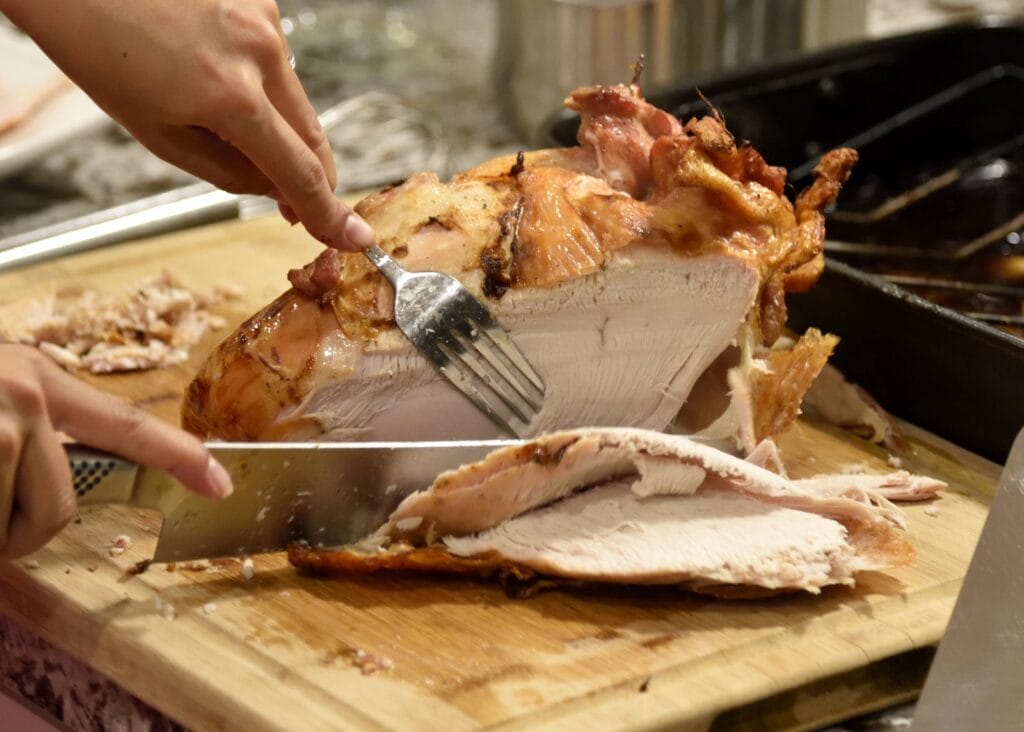
A whole turkey or a large rib of beef is the item most likely to cause trouble in a Christmas kitchen. The centre of a large joint takes a long time to reach a safe temperature, and the same bulk makes it slow to cool.
- Thaw fully in the fridge. A large frozen bird can take several days, so plan delivery and fridge space well ahead.
- Cook thoroughly. Probe the thickest part of the meat and record the temperature.
- Carve and cool in portions. Smaller pieces cool far faster than a whole joint. Spread them in shallow trays and refrigerate promptly.
- Keep raw and cooked apart. Use separate boards, utensils and storage to prevent cross-contamination.
Christmas pressure points
The science is the same all year. What changes in December is volume, staffing and the temptation to cut corners when the pass is full.
- Cooking ahead. Pre-cooking for set menus is normal, but every batch needs proper cooling, labelling and reheating checks.
- Fridge capacity. Overloaded fridges struggle to hold temperature. Check and record temperatures more often during peak weeks.
- Temporary staff. Seasonal workers may not know your probe checks, cooling routines or allergen procedures. Brief them before their first shift and supervise closely.
- Hot holding for functions. Buffets and carveries need temperature checks throughout service, with a clear rule for food that falls below 63°C.
- Records. Busy shifts are when diaries go blank. Missing records can affect your food hygiene rating at inspection.
Our article on food hygiene ratings and Level 3 Supervising Food Safety explains how supervision and record keeping feed into your score.
Allergens in festive food
Christmas menus bring allergens that do not appear the rest of the year. Nuts in desserts and sauces, celery in stuffing and stock, and sulphites in dried fruit and wine-based dishes are common examples. Seasonal suppliers and new recipes mean your allergen matrix needs updating before the menu goes live.
For food that is not prepacked, such as dishes served in a restaurant, you must be able to give accurate allergen information to customers. Food that is prepacked for direct sale, such as sandwiches or festive boxes made and packed on site, must carry a full ingredients list with allergens emphasised under Natasha’s Law. The Allergen Awareness course suits front and back of house teams.
Updating your HACCP plan for Christmas
Food businesses must put in place and maintain a food safety management system based on HACCP principles. This comes from Article 5 of Regulation 852/2004 as retained in UK law. Safer Food, Better Business is one way smaller businesses meet this duty.
A Christmas menu often introduces new dishes, new suppliers and new methods such as cooking ahead and holding for functions. Review your hazard analysis for each new process, set critical limits and decide who checks them. Our article on Level 3 HACCP training sets out how to build and review these controls.
Level 3 Supervising Food Safety
This online course covers temperature control, cross-contamination, HACCP, food safety law and how to supervise staff in a busy kitchen. It is designed for chefs, kitchen managers and supervisors and is NFAQ certified.
Frequently asked questions
How long can hot food be kept below 63°C?
FSA guidance allows hot food to be kept below 63°C for up to two hours, once only. After that it must be served, cooled to 8°C or below, or thrown away. Record the time it was taken out of hot holding.
Can we reheat leftover turkey more than once?
No. Food should be reheated only once, until it is steaming hot all the way through. In Scotland, reheated food must reach at least 82°C.
How quickly should cooked food be cooled?
Cool it as quickly as possible. Safer Food, Better Business advises refrigerating cooked food ideally within 90 minutes. Dividing large batches into smaller, shallow containers speeds this up.
Do temporary Christmas staff need food hygiene training?
Food handlers must be supervised and instructed or trained in food hygiene matters relevant to their work. The Level 2 Award in Food Hygiene is a common choice for seasonal staff.
This article was published in November 2026 by National Compliance Training. Regulations change, so always check the latest guidance from the Food Standards Agency for the current position. This article does not constitute legal advice.