
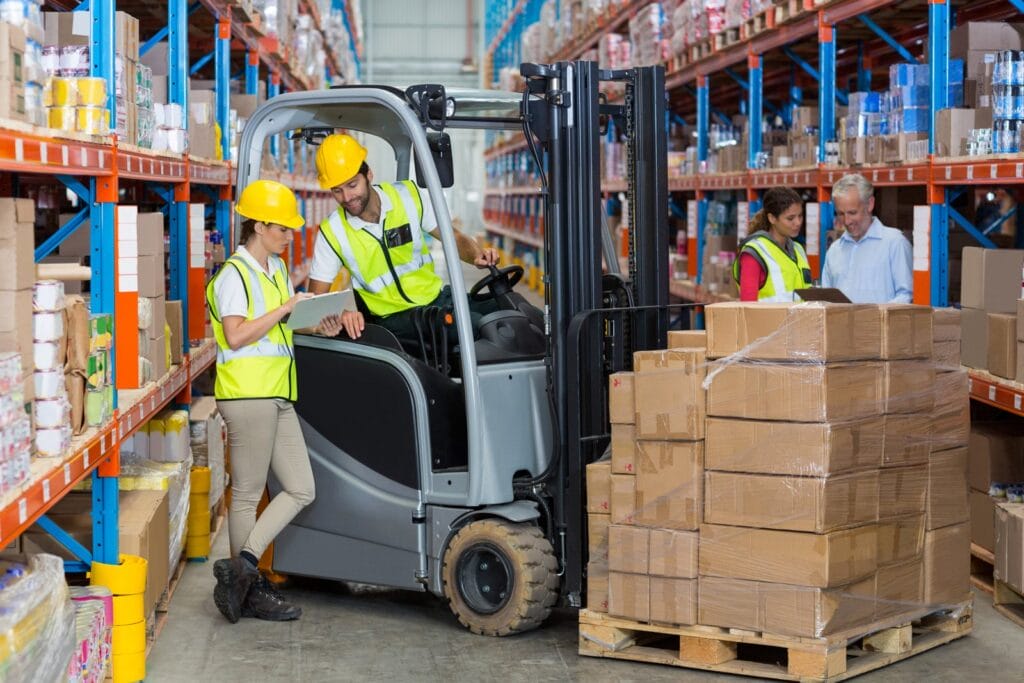
Agency and temporary workers can drive forklifts and other MHE during peak season, but only once your business has checked their training and authorised them in writing. HSE’s Approved Code of Practice L117 says lift truck operators need basic training, specific job training and familiarisation training. A certificate from another employer does not authorise anyone to drive on your site. The business where the work happens usually controls the work day to day, so it carries health and safety duties for agency workers. It must check competence, assess where needed, and supervise them.
This post is for warehouse managers, shift supervisors and site managers who bring in agency and temporary staff for the Christmas peak. It covers the legal position, how to check and authorise operators, the hazards that rise during peak, and the site controls that keep pedestrians and drivers apart.
The legal position for agency operators
HSE guidance on agency and temporary workers says the end user business usually has day-to-day responsibility for health and safety during an assignment. That is because it directs the work and often controls the premises. The agency still has duties, and the two should agree who does what before the worker starts.
Several sets of rules apply to lift trucks:
- PUWER 1998. Regulation 9 requires employers to make sure people who use work equipment have received adequate training.
- LOLER 1998. Lift trucks are lifting equipment, so they need thorough examination at intervals set by LOLER or by a written scheme of examination.
- ACOP L117. “Rider-operated lift trucks: operator training and safe use” sets out the three stages of training and the need for written authorisation.
Our post on who is responsible for forklift safety explains how these duties fall on managers and supervisors.
Checking and authorising agency operators
The three stages of training
- Basic training. The skills and knowledge to operate a type of truck safely. This is what most operator certificates show.
- Specific job training. How the truck is used in your operation, including your racking, loads, attachments and site rules.
- Familiarisation training. Practical time on your site, under supervision, learning the layout, routes and emergency procedures.
An agency worker may arrive with evidence of basic training. You still need to provide or confirm the specific job training and familiarisation for your site.
What to check before day one
- Evidence of training. Ask the agency for certificates showing the truck types covered and the date of training.
- Match to your trucks. A counterbalance certificate does not cover a reach truck. Check the categories match the equipment the worker will use.
- Recent experience. A long gap since the worker last drove a truck may mean they need refresher training or reassessment.
- Your own assessment. A short practical assessment on your site shows whether the operator is safe on your trucks and in your aisles.
Written authorisation
L117 says operators must be authorised in writing by their employer before they drive. In practice, the business where the work happens should only let agency operators drive once it has checked their competence and issued its own authorisation. Record which trucks each person is authorised to use. Our post on in-house versus accredited forklift training covers the options if you need to train operators yourself.
Why peak season raises the risk
- More pedestrians. Extra pickers, packers and visitors share space with trucks.
- Rushed loading. Tight trailer turnarounds put pressure on drivers to cut corners.
- Temporary storage. Overflow stock is placed in aisles and walkways, blocking routes and sight lines.
- Night shifts. Fatigue rises and there are often fewer supervisors on site.
- Unfamiliar trucks. Hired trucks may have different controls from those your operators are used to.
Site controls for the peak
Keep people and trucks apart
Mark pedestrian walkways and keep them clear. Use barriers where people and trucks would otherwise meet, and set crossing points with good visibility. Review the layout before overflow stock arrives.
Induction and supervision
Every temporary worker should receive a site induction covering traffic routes, pedestrian rules and emergency procedures. New operators should work under closer supervision for their first shifts. Supervisors need to be able to spot unsafe driving and stop it.
Pre-use checks
Operators should check their truck at the start of each shift, using a written checklist. Faults should be reported and the truck taken out of use until it is safe. This applies to hired trucks as much as your own fleet.
Plan the workload
Set realistic loading targets and build in breaks. Agree how drivers report near misses, and act on what they report.
Level 3 Managing and Supervising MHE Operations
This online course covers the legal duties, operator training and authorisation, traffic management and supervision of lift truck operations. It is designed for warehouse managers and supervisors, and it is NFAQ certified.
If your operators need basic training or refreshers before the peak, we run RTITB accredited counterbalance courses and reach truck courses, delivered in the classroom or on your site.
Frequently asked questions
Can an agency worker drive our forklifts using a certificate from another company?
The certificate shows they have had basic training. It does not authorise them on your site. You need to check their competence, provide job and site familiarisation, and authorise them in writing.
Who is responsible for an agency forklift driver’s safety?
Both the agency and the business where the work happens have duties. HSE guidance says the end user usually has day-to-day responsibility because it directs the work. The two should agree who does what before the assignment starts.
Do we need to assess an experienced agency operator?
A short practical assessment on your site is good practice. It confirms the operator can work safely on your trucks, loads and layout. It also gives you evidence to support your written authorisation.
This article was published in November 2026 by National Compliance Training. Regulations change, so always check the latest guidance from HSE for the current position. This article does not constitute legal advice.