
The Christmas rush changes your fire risk, so your fire precautions must keep up. Under the Regulatory Reform (Fire Safety) Order 2005, the responsible person must review the fire risk assessment when there is a significant change, such as extra stock, a new layout or decorations. Escape routes and exits must stay clear and usable, fire doors must be maintained, and every employee, including temporary and agency staff, must receive fire safety information and training when they start. The fire risk assessment must be recorded in full.
This guide is for store managers, warehouse and hospitality managers, fire wardens and anyone acting as the responsible person in a business that gets busier before Christmas. It covers the legal duties, the common peak season hazards, inducting temporary staff and the role of fire wardens.
What the Fire Safety Order requires
The Regulatory Reform (Fire Safety) Order 2005 applies to most non-domestic premises in England and Wales. It places duties on the responsible person, usually the employer or the person in control of the premises.
- Fire risk assessment: carry out a suitable and sufficient assessment and review it regularly, and whenever there is reason to think it is no longer valid or there has been a significant change.
- Escape routes: keep routes and exits clear so that people can leave quickly and safely.
- Fire safety measures: maintain fire doors, alarms, emergency lighting and firefighting equipment in good working order.
- Information and training: give employees fire safety training when they start, and again when they are exposed to new or increased risks, under Article 21.
Since 1 October 2023, changes made by the Building Safety Act 2022 mean all responsible persons must record the fire risk assessment in full. Our article on fire risk assessment and the responsible person’s duties explains the wider duties in more detail.
Peak season fire hazards
The weeks before Christmas bring more stock, more people and more pressure on space. Each of these can undermine fire precautions that work well the rest of the year.
Stock and storage
- Corridors and stairways: overflow stock stored in escape routes narrows or blocks the way out.
- Final exits: pallets, cages and deliveries left against exit doors can stop them opening fully.
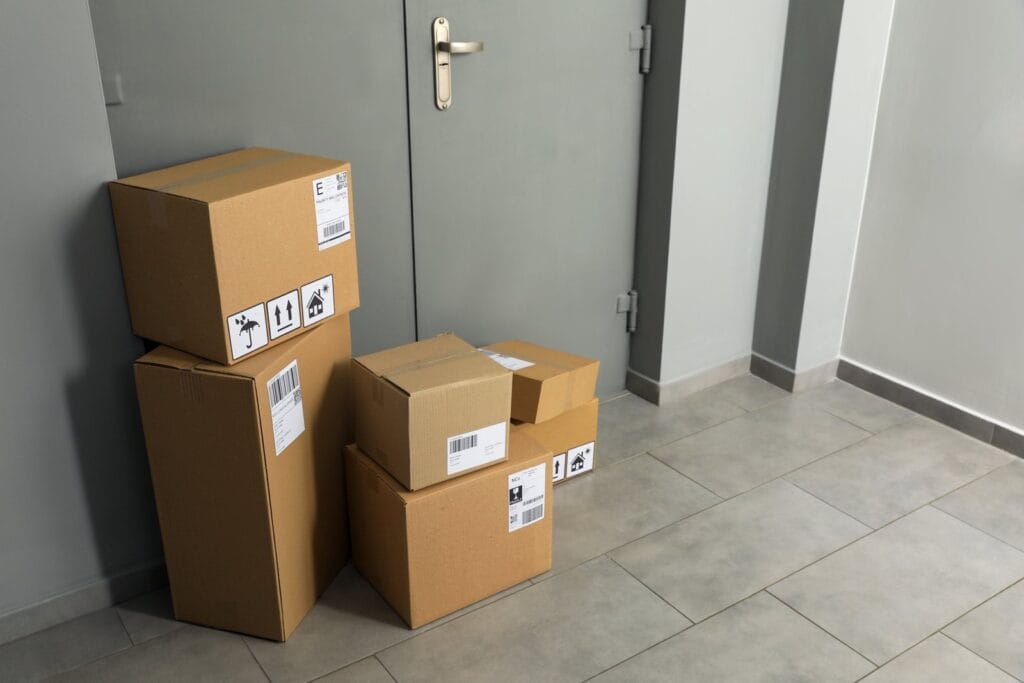
- Cardboard and packaging: extra packaging adds fuel load, especially when it builds up near ignition sources or by bins at the back door.
Fire doors
Fire doors are often wedged open to make deliveries easier. A wedged fire door cannot hold back smoke or fire. If doors need to stay open for operational reasons, the fire risk assessment should consider suitable hold-open devices that release when the alarm sounds.
Electrics, heaters and decorations
- Overloaded sockets: extra tills, chargers and display lighting can lead to daisy-chained extension leads.
- Temporary heaters: portable heaters in stockrooms and doorways need clearance from stock and packaging.
- Decorations: decorations should not cover detectors, signs, call points or emergency lighting, or be hung where they can catch light.
More people
Higher footfall means more members of the public who do not know the building. Evacuation plans should account for peak occupancy and how staff will direct customers to the nearest safe exit.
Temporary and agency staff
Seasonal workers often start at the busiest time, with little time for induction. Article 21 still applies. Every new member of staff must receive fire safety information and training when they start, whether they are employed directly or supplied by an agency.
A short, practical induction should cover at least:
- how to raise the alarm and what the alarm sounds like;
- the nearest escape routes and final exits from their work area;
- where the assembly point is and who they report to;
- their role in helping customers leave;
- the rule that escape routes and fire doors must never be blocked or wedged.
Walk new starters through the routes in person. A tour of the building is quicker to absorb than a printed sheet, and it lets you check that the routes are clear at the same time.
Fire wardens over the peak
The number of fire wardens you need depends on your fire risk assessment. It should reflect the size and layout of the premises, the number of people present and the hours you operate.
Christmas often brings longer opening hours, extra shifts and staff holidays. Check that there is warden cover on every shift, including late evenings, early deliveries and weekends. Brief wardens on any layout changes, temporary storage areas or blocked routes so they know what to check on their sweeps. Our post on fire warden duties and the law explains what wardens are expected to do.
Managers who need to update the assessment for seasonal changes may find the Fire Risk Assessment for the Responsible Person course helpful, and Fire Safety in the Workplace suits general staff.
Level 2 Fire Warden
This online course covers fire warden duties, fire prevention, evacuation procedures and how to carry out checks and sweeps. It is designed for staff appointed as fire wardens or fire marshals and is NFAQ certified.
Frequently asked questions
Do we need to review our fire risk assessment for Christmas?
You must review it when there has been a significant change. Extra stock, new storage areas, layout changes, decorations and higher occupancy can all count. Record the review and any new control measures.
Do agency workers need fire safety training?
Yes. Fire safety information and training must be given to staff when they start work, including temporary and agency staff. Cover the alarm, escape routes, assembly point and their role during an evacuation.
Can we store stock in a corridor for a few weeks?
Escape routes must be kept clear and usable at all times. Storing stock in corridors, stairways or against final exits is a serious fire safety failing, even for a short period.
How many fire wardens do we need?
There is no fixed number in law. The fire risk assessment should decide it, based on the premises, the people present and the hours of operation, with cover across every shift.
This article was published in November 2026 by National Compliance Training. Regulations change, so always check the latest guidance from GOV.UK for the current position. This article does not constitute legal advice.